
Wisdom Teeth: Signs They're Coming, and When They Really Need to Come Out
Short answer
Not every wisdom tooth needs to come out. Wisdom teeth that are healthy, fully through, in a normal position and easy to keep clean can simply be left alone and kept an eye on. Removal is for teeth that are actually causing problems, or that clearly look likely to, such as repeated infections, decay or a cyst.
At a glance
- Wisdom teeth are your third molars, and they're the last to come through, usually in the late teens to mid-twenties.
- Impacted simply means the tooth doesn't have enough room to come through properly.
- A partly erupted tooth often leaves a little flap of gum over the top, which is exactly the spot where food and bacteria collect.
- The Australian Dental Association is clear that there's currently no evidence that wisdom teeth push the front teeth crooked.
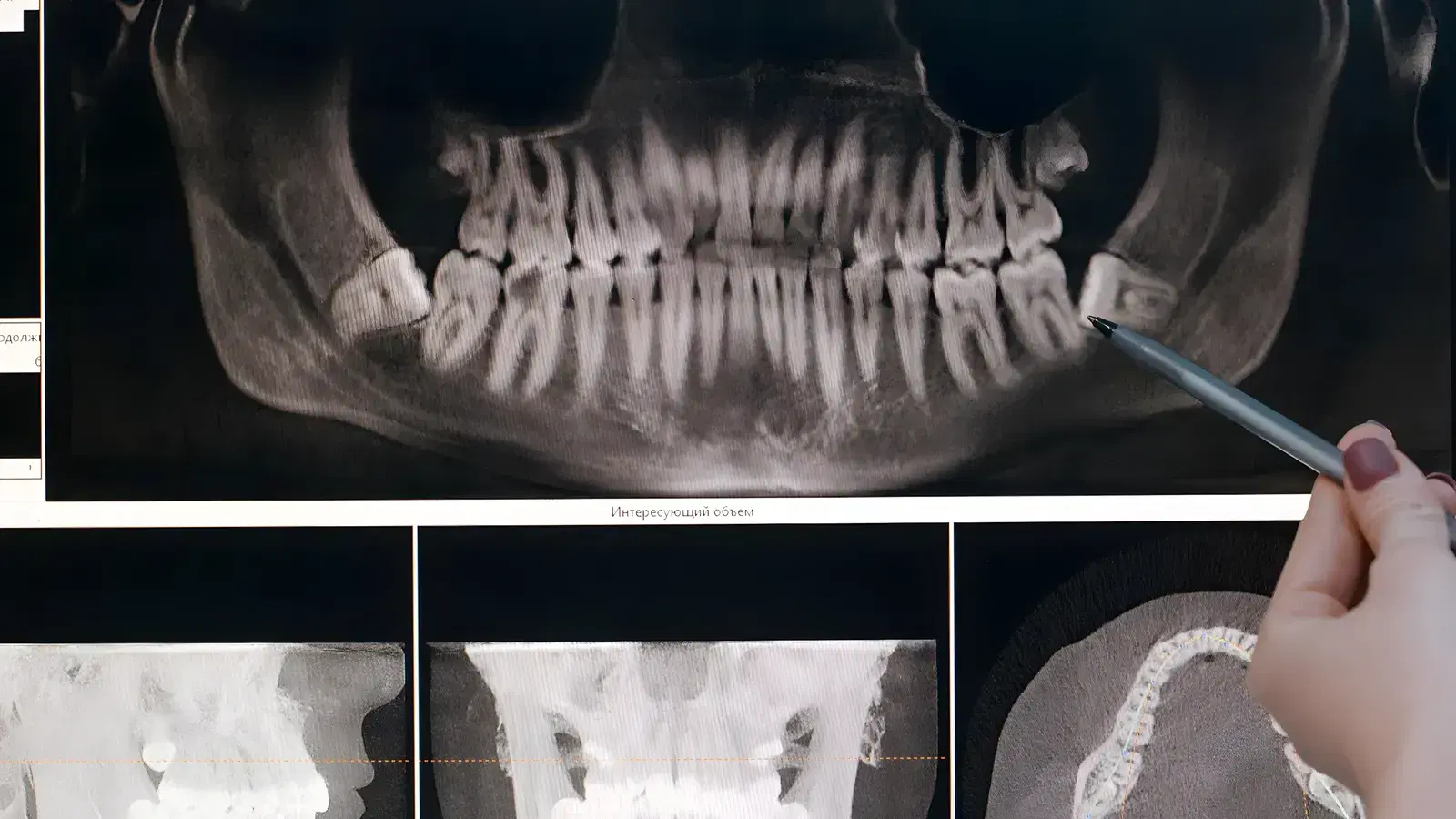
- A dental X-ray shows the full position of the tooth, the shape of its roots, and how close it sits to the nerve in the lower jaw.
Do Your Wisdom Teeth Really Need to Come Out?
Not every wisdom tooth is a problem, and not every one needs to come out. Here's how to read the signs, and how to tell a tooth that can stay from one that shouldn't.
Wisdom teeth have a bigger reputation than they often deserve. The truth is more nuanced, and more reassuring: plenty of wisdom teeth are perfectly fine to keep. The trick is knowing which ones are settling in happily and which ones are heading for trouble. Here's a straight guide.
What wisdom teeth are, and when they arrive
Wisdom teeth are your third molars, the last teeth right at the back of the jaw. They're the last to come through, usually in the late teens to mid-twenties. Most people have four, but it's completely normal to have fewer, or none at all, and some sit under the gum and never fully appear. So if yours are turning up in your early twenties, that's right on schedule.
Signs they may be coming through
You'll often feel wisdom teeth before you see them. Common experiences include pressure or a dull ache right at the back of the jaw, and tenderness or swelling in the gum behind your last molar. Because these teeth are so far back and often only partly through, the gum around them can trap food and become sore or inflamed, and you might find it hard to open wide. None of that automatically means they have to go, but it's your cue to get them looked at.
What "impacted" means
You'll hear the word "impacted" a lot with wisdom teeth. It simply means the tooth doesn't have enough room to come through properly. For most people the jaw just isn't big enough for that last tooth, so it can stay stuck under the gum, come through only part way, or push in at an angle and bump against the tooth in front. A partly erupted tooth often leaves a little flap of gum over the top, which is exactly the spot where food and bacteria collect.
The problems they can cause
When wisdom teeth do cause trouble, it's usually one of these:
- Pericoronitis: infection and inflammation of the gum flap over a partly erupted tooth. It can be painful and tends to flare up more than once.
- Decay and gum disease: a tooth right at the back, or at an awkward angle, is genuinely hard to clean, so it (and the tooth next door) is more prone to decay.
- Damage to the neighbour: a wisdom tooth angled into the second molar can cause decay or damage where they meet.
- Cysts and other issues: less commonly, a fluid-filled cyst can form around an impacted tooth, along with ulcers where a sideways tooth rubs the cheek.
One myth worth clearing up: many people believe wisdom teeth push the front teeth crooked. The Australian Dental Association is clear that there's currently no evidence to support that idea, so it isn't a good reason on its own to remove them.
Do they always need to come out? No.
This is the part that surprises people. Wisdom teeth that are healthy, fully through, in a normal position and easy to keep clean can simply be left alone and kept an eye on. The modern, evidence-based approach is not to remove trouble-free wisdom teeth "just in case." Removal is for teeth that are actually causing problems, or that clearly look likely to. If yours are behaving, monitoring them at your regular check-ups is a perfectly legitimate plan, and often the right one.
When removal is the sensible call
It's usually time to consider taking a wisdom tooth out when it's causing repeated infections or pain, when it or its neighbour is decaying because it can't be cleaned, when it's damaging the tooth in front, or when a cyst has formed around it. In those cases, removing it solves the problem and protects the healthy teeth around it.
How we work out which is which
A look in the mouth only tells part of the story, because so much of a wisdom tooth can be hidden under the gum. We'll usually take a dental X-ray, often a panoramic (OPG) one, to see the full position of the tooth, the shape of its roots, and how close it sits to important structures like the nerve in the lower jaw. That's what lets us give you a genuine recommendation rather than a guess, whether that's "leave it and watch," or "this one is worth removing, and here's why."
If your wisdom teeth are making themselves known, come in for an assessment and we'll tell you honestly where they stand. We take an unrushed, conservative approach here in Kew, we welcome all health funds with HICAPS at the chair, and we're open Saturdays. Book at stradbrokedental.com.au or call (03) 9817 7123.
Sources & further reading
Common questions
- What are the signs that wisdom teeth are coming through?
- You'll often feel wisdom teeth before you see them. Common experiences include pressure or a dull ache right at the back of the jaw, and tenderness or swelling in the gum behind your last molar. The gum around them can trap food and become sore or inflamed, and you might find it hard to open wide.
- How many wisdom teeth do people have?
- Most people have four, but it's completely normal to have fewer, or none at all, and some sit under the gum and never fully appear.
- What is pericoronitis?
- Pericoronitis is infection and inflammation of the gum flap over a partly erupted tooth. It can be painful and tends to flare up more than once.
- Do wisdom teeth push the front teeth crooked?
- Many people believe so, but the Australian Dental Association is clear that there's currently no evidence to support that idea, so it isn't a good reason on its own to remove them.
- When should a wisdom tooth be removed?
- It's usually time to consider taking a wisdom tooth out when it's causing repeated infections or pain, when it or its neighbour is decaying because it can't be cleaned, when it's damaging the tooth in front, or when a cyst has formed around it.
Related reading
- What Wisdom Teeth Removal Costs and What Recovery Is Really LikeIf a wisdom tooth needs to come out, the two big questions are always the same: what will it cost, and how rough is the recovery?
- Root Canal or Extraction? How We Decide (and Why Saving the Tooth Usually Wins)When a tooth is badly infected, you have two roads: save it or remove it. Here's the honest trade-off, and how we help you weigh it up.
- Dental Abscess: Why That Pimple on Your Gum Is Never NothingIt's tempting to hope a gum abscess will settle on its own, especially once it drains and the pain eases. Here's why that relief doesn't mean it's cured.
New to Stradbroke Dental?
Your first visit is one fixed fee: exam, comprehensive clean, and X-rays if clinically required.
See what the $199 new patient visit covers