
What Really Happens If You Ignore a Cavity (and When You Genuinely Don't Need to Worry)
How decay actually progresses
A straight explanation of how decay actually progresses, including the early stage that can heal on its own, and the point where waiting genuinely costs you.
Here's a question we get more than almost any other: "Does this actually need fixing now, or is it one of those things dentists like to jump on?" It's a fair question, and you deserve a fair answer. One that admits not everything is an emergency, while being honest about the point where waiting really does work against you.
To answer it properly, it helps to understand what a cavity actually is and how it moves. Decay isn't a single event. It's a slow process with distinct stages, and where your tooth sits on that path is what decides whether you can watch it or need to act.
How decay actually progresses
Think of it as a journey from the outside of the tooth inward. It starts as a white spot, where acid from plaque pulls minerals out of the enamel, leaving a chalky white or dark patch. Crucially, the surface hasn't broken yet, and this stage is reversible, your saliva and fluoride can put minerals back in and stop, or even heal, the damage. No drill required. If demineralisation keeps winning, the surface finally breaks down into an actual cavity. Once there's a true hole, it won't heal itself and needs a filling, but it's still small and straightforward at this point. From there decay can move into the softer dentine beneath the enamel, where it travels faster and teeth often start reacting to sweet, hot or cold, still very treatable with a filling, but the window for the simple fix is closing. Reach the living centre of the tooth, the pulp, and you get inflammation and the kind of toothache people remember, at which point a filling usually isn't enough and you're looking at root canal treatment. And if the nerve dies and infection sets in, you're dealing with an abscess, meaning root canal or extraction, plus the infection itself.
The single most important thing to notice: the early you can heal, the early-to-middle you fix with a filling, and only at the deep end do things get expensive and uncomfortable. Caught early, decay is one of the cheapest, easiest problems in dentistry.
Why it usually doesn't hurt until it's serious
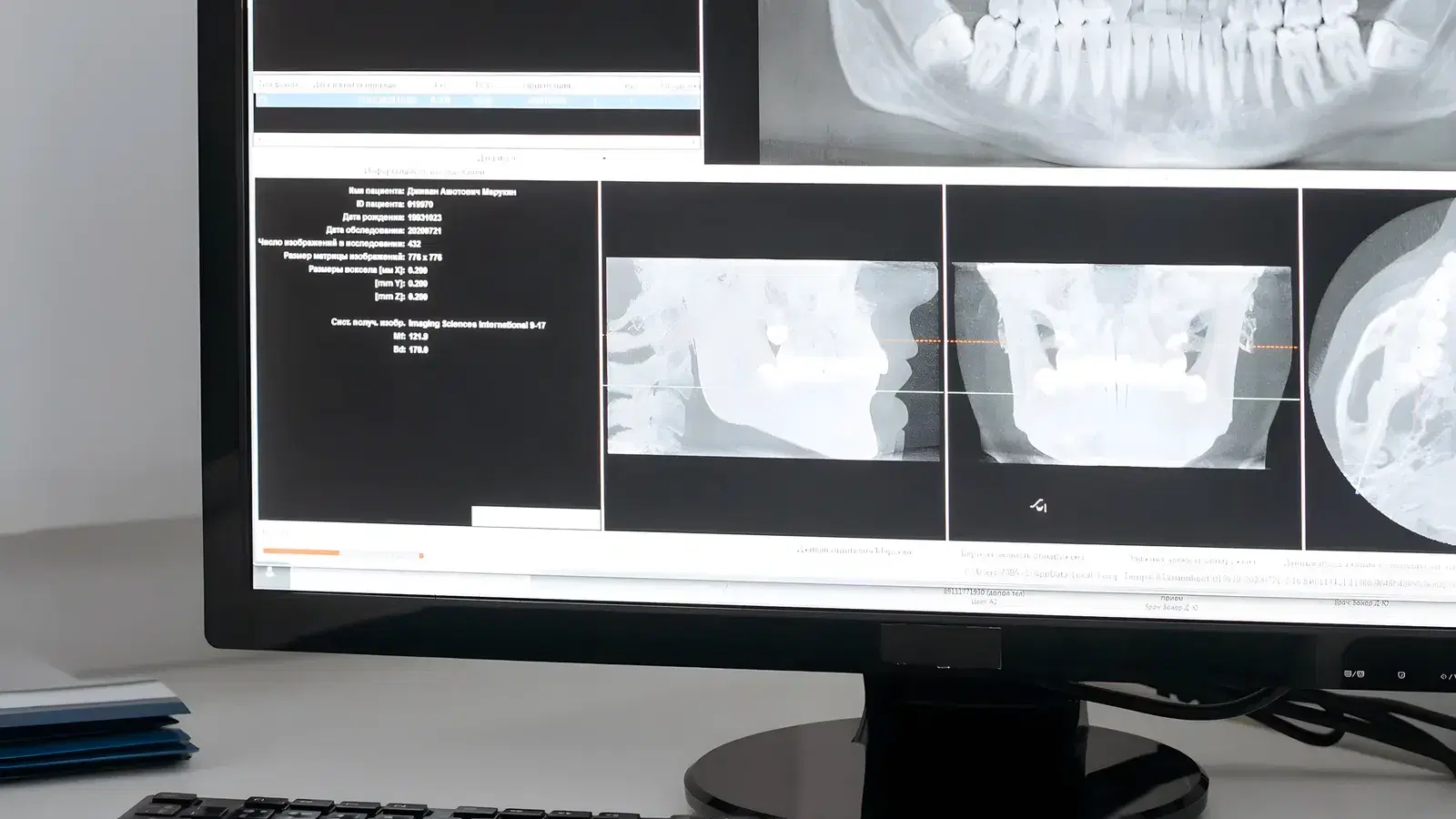
This is the part that breeds suspicion, so it's worth explaining. Enamel has no nerves in it, and neither does the early reach of decay. So a cavity can be growing for a long time, sometimes visible only on an X-ray, while the tooth feels completely fine. Pain tends to arrive once decay is already into the dentine or near the nerve, which is to say once it's advanced. That's not your dentist crying wolf. It's the genuine, frustrating biology of teeth, and it's exactly why we use X-rays and check-ups to find problems before they start hurting
When you genuinely don't need to rush
Plenty of things really can be watched, and a trustworthy dentist will tell you so. Those early white-spot lesions are the clearest example, rather than drilling them, the right move is often to monitor and help them remineralise with fluoride and better habits. We literally write "watch" on the chart and check it next visit. If anyone wants to drill a tooth that hasn't actually cavitated yet, that's a fair moment to ask why, or to get a second opinion. Conservative is a legitimate option, and sometimes it's the right one.
When you really shouldn't wait
On the other side, some signals mean the watching is over: lingering pain, pain that wakes you, or sensitivity that hangs around after the hot or cold is gone suggests the nerve is involved. Swelling, a gum "pimple," or a bad taste can mean an abscess, which needs prompt attention. And a hole, a dark patch, or food constantly catching in one spot are all worth acting on. Untreated infection doesn't stay politely in one tooth, and while the worst outcome is usually a root canal or a lost tooth, on rare occasions it can spread further and become genuinely serious. That's uncommon, and we mention it not to frighten you but to be honest about why a spreading infection is the one thing you don't gamble on.
When you really shouldn't wait
The whole game is staying at the cheap, painless end of that journey: brush twice a day, clean between your teeth, ease up on sugary and acidic drinks, drink fluoridated tap water, and keep up regular check-ups so anything new gets caught while it's still a "watch" and not a "root canal." If you've spotted a mark on a tooth or something just feels off, the honest move is to get it looked at while your options are still wide open. We'll tell you straight whether it needs doing now or whether it's one to keep an eye on. Book any time at stradbrokedental.com.au
When you really shouldn't wait
The whole game is staying at the cheap, painless end of that journey: brush twice a day, clean between your teeth, ease up on sugary and acidic drinks, drink fluoridated tap water, and keep up regular check-ups so anything new gets caught while it's still a "watch" and not a "root canal."
If you've spotted a mark on a tooth or something just feels off, the honest move is to get it looked at while your options are still wide open. We'll tell you straight whether it needs doing now or whether it's one to keep an eye on. Book any time at stradbrokedental.com.au.
Sources & further reading
Related reading
- Dental Abscess: Why That Pimple on Your Gum Is Never NothingIt's tempting to hope a gum abscess will settle on its own, especially once it drains and the pain eases. Here's why that relief doesn't mean it's cured.
- Why Is Dental Care So Expensive in Australia, and What You Can Actually Do About ItThe honest reasons dental bills sting in this country, what your health fund really covers, and practical ways to keep costs under control.
- Why Did My Dentist Recommend a Crown Instead of Just a Filling?A crown costs more than what a filling does, so it's completely fair to ask why one is needed. Here's the honest logic behind the decision.
New to Stradbroke Dental?
Your first visit is one fixed fee: exam, comprehensive clean, and X-rays if clinically required.
See what the $199 new patient visit covers